
-
In the Beginning
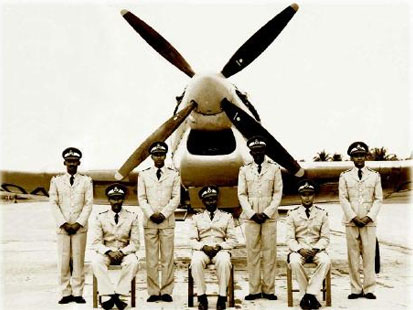

The Royal Ceylon Air Force was born on 2nd March 1951.
At inception, the RCyAF owned no aircraft. Early recruits had to make do with PT and Drill routines, until the first four Chipmunks arrived, and later the Oxfords and Balliols as well. The RCyAF's first trainer, the Chipmunk was ordered in 1950 and the first batch of four aircraft arrived in Ceylon in October the same year.
-
The Winds of Change
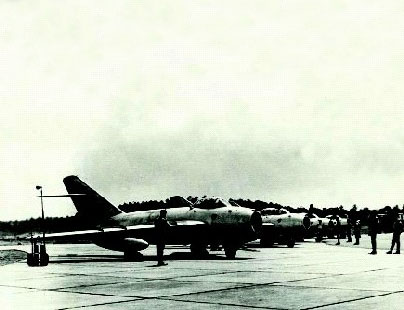

Hardly three months into his command, Commander Mendis was summoned by telephone to Temple Trees where the Prime Minister, the Hon Sirimavo Bandaranaike announced the outbreak of a Southern-led insurgency in the island. This was the first serious internal threat faced by Ceylon.
-
Coming of Age
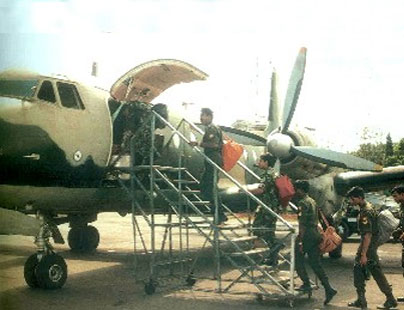

Additions to the fleet in 1987 came in the form of four more Yunshuju - 12s and two of the SLAFs first Y8 heavy transport aircraft, the Chinese version of the Russian Antonov AN12.
The addition of the Y8 to the fleet also introduced the capabilities of air lifting more than 150 personnel in a single flight, whilst the Y12 could land and take off, even on grass fields.
-
Of Kfirs and UAVs
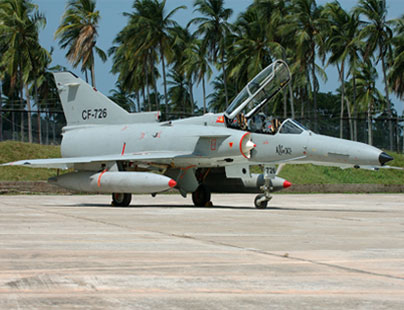

In 1997 the SLAF flew over 20,000 hours, operationally for the first time ever, logging 21,895 hours in total and they did this despite losing nine manned aircraft.
Operation Jayasikuru was by far the most arduous undertaking for the SLAF. This we may glean from the sheer number of missions flown by SLAF aircraft.
-
A New Era and Peace
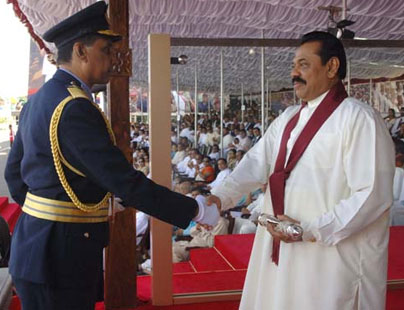

SLAF was an integral part of the recently concluded Humanitarian Operations and played a key role by providing close air support by the MI-24 Helicopter gunships, the accurate target acquisition by the fighter jets and the casualty evacuation operations carried out in the midst of the battle by the SLAF helicopters.



